

Duong Quoc Viet, Vice Dean of the Faculty of Business Administration at Thu Duc College of Technology, has contributed his vast professional knowledge to the sustainable development of vocational education and training (VET) in the logistics industry of Vietnam.
His experience with competency-based training and assessment (CBTA) gained through Aus4Skills training has enabled Viet to improve VET teaching quality at his college. He has also helped to extend the industry-led skill development model across VET colleges and increase industry linkages. Thanks to these connections, many students have secured internships at major enterprises where they learn practical skills before entering the labour market.
On Vietnamese Teachers’ Day, we talk with Mr. Viet about promoting and renovating vocational education and training in Vietnam.

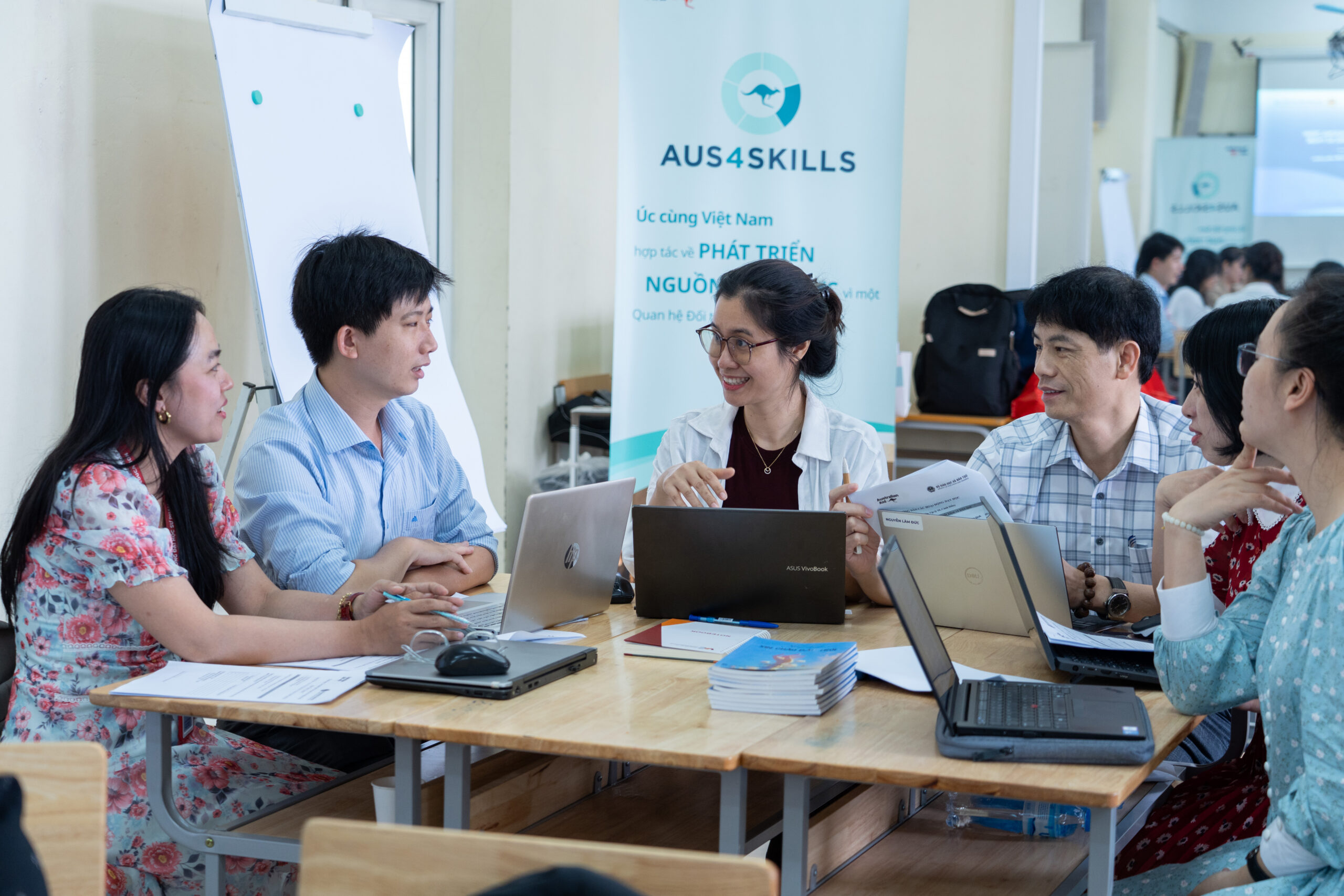
.jpg) Mr. Duong Quoc Viet in a lesson at a Vietnamese VET college.
Mr. Duong Quoc Viet in a lesson at a Vietnamese VET college.
From the perspective of an experienced VET teacher, can you tell us how contemporary educational methods and models such as competency-based training and assessment (CBTA) and industry-led skill development benefit logistics vocational education and training in Vietnam?
I am very honoured to be assigned by Thu Duc College of Technology to participate in the Aus4Skills program since 2017, thereby learning and experiencing the CBTA method and the industry-led skill development model.
CBTA is a learner-centred method with a focus on their ability to acquire vocational competencies. We evaluate student quality regularly throughout their training to ensure graduates meet the market’s demands for skills and are able to multitask and coordinate with others to complete their tasks.
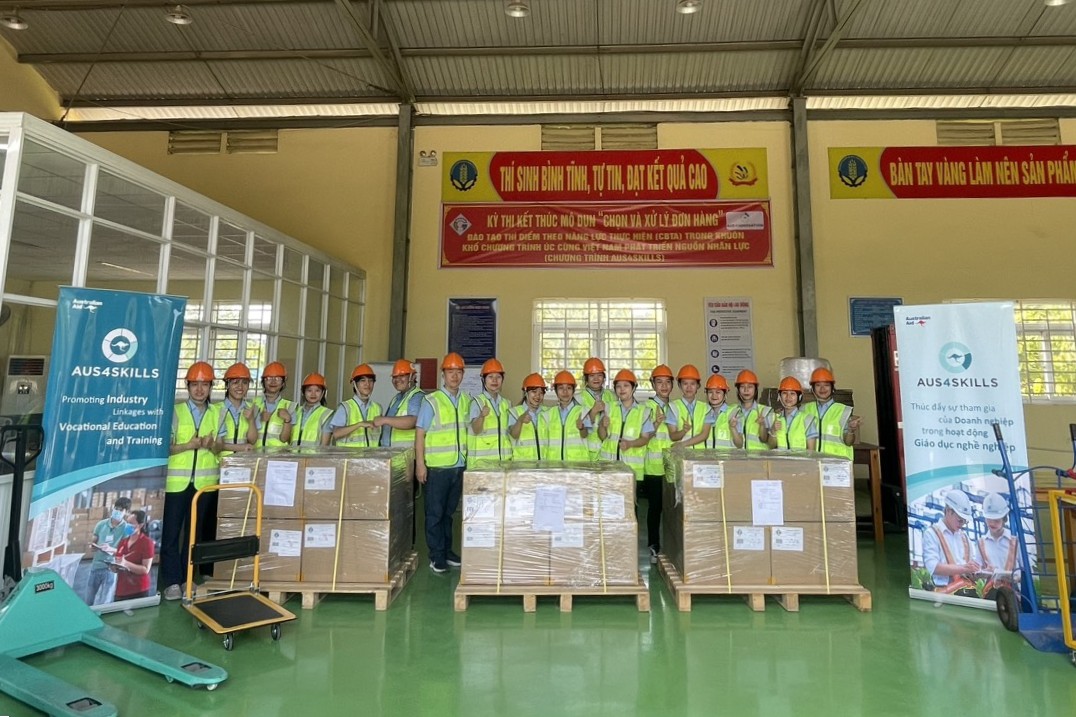
Since 2019, we have implemented nine pilot CBTA training projects for 158 students from colleges and intermediate schools, equipping them with capacity to meet market requirements while not overloading them with theory.
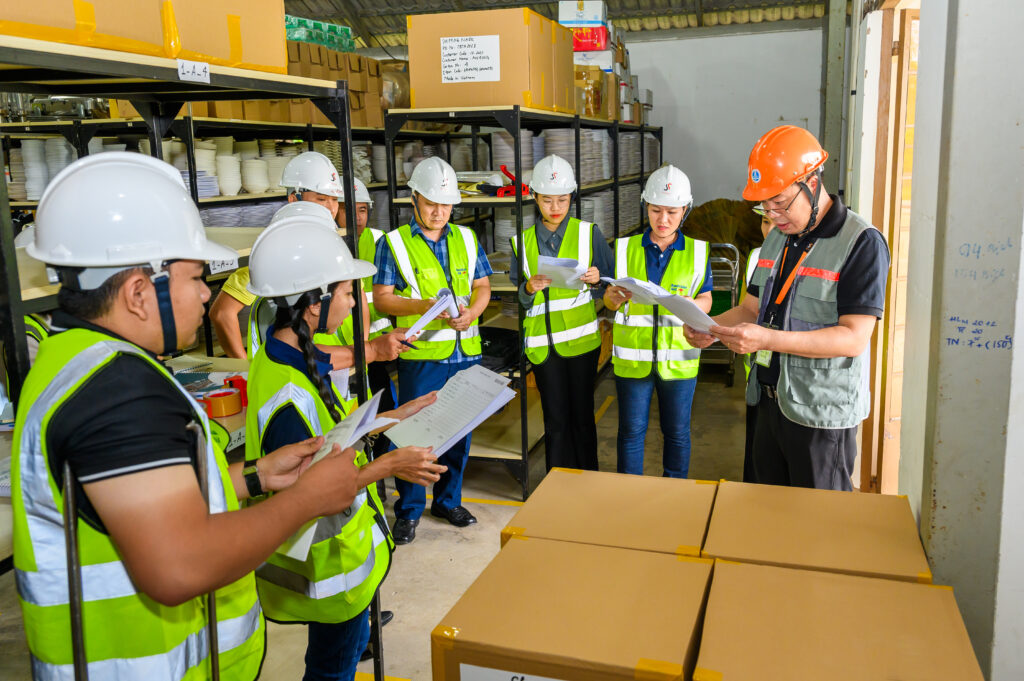
.jpg) Students practise warehouse management skills under pilot CBTA training modules.
Students practise warehouse management skills under pilot CBTA training modules.
Currently, our college-level logistics training focuses on students’ knowledge, skills, and attitudes. We also have specific modules to help students understand vocational education and make career decisions. In addition, we apply an industry-led skill development model in the Business Semester in which students can become more confident with their practical knowledge and skills before entering the labour market.
Thu Duc College of Technology recently signed training cooperation agreements with six new logistics companies, including Strategix International College (Australia). This means we are now partnering with more than 200 enterprises. Thanks to this access to real working environments, students can have their skills and work attitudes evaluated professionally, supporting their personal development. Enterprises are more than ready to support our college as they also benefit from having potential members of the workforce on board.
The industry and VET linkage model clearly improves the capacity training and graduate quality. Developing international partnerships, such as access to industry-led skills training in advanced countries like Australia (through Aus4Skills), provides learning opportunities for both VET lecturers and students, accelerating the development of Vietnam’s VET sector.
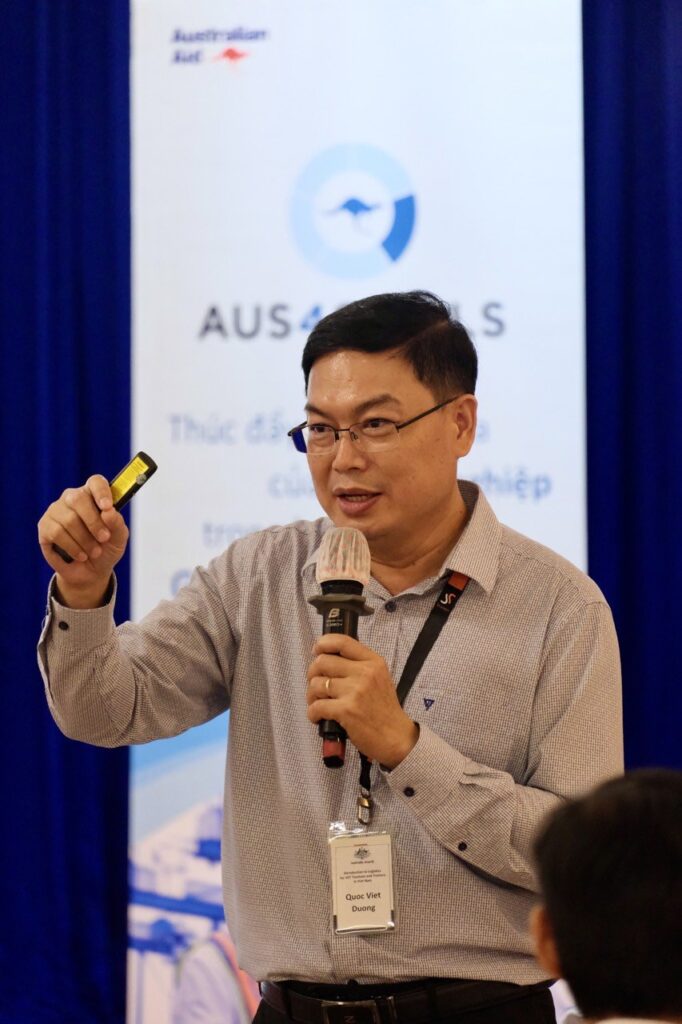
.jpg) Mr. Duong Quoc Viet in a VET activity of Aus4Skills.
Mr. Duong Quoc Viet in a VET activity of Aus4Skills.
What do you think about Australia’s internationally-recognised VET system and the application of related knowledge and experience to VET in the logistics industry of Vietnam?
The Australian education system is one of the best in the world, designed for both national and international students. Its attractiveness comes from its long-term development and collection of high-standard elements that we have also applied to vocational training in Vietnam, namely knowledge, skills, attitudes, and ability to find jobs.
We can clearly see successes in the application of Australian VET standards, methods and lessons learnt in Vietnam. My college has recorded a rapid and steady increase in logistics student enrolment over the past few years, from 69 new students in 2018 to 250 new students in 2023. After their internships at enterprises, around 10% of students were offered an official position, and the rest all found jobs corresponding to their training majors.
For Vietnam, VET still has a long journey that requires the development of a clear roadmap. Vietnam’s law on Vocational Education and Training indicates that it must adhere to regional and international standards. This includes learning from the expertise and experience from other countries such as Australia and mutual recognition of qualifications in case of labour mobility among countries.
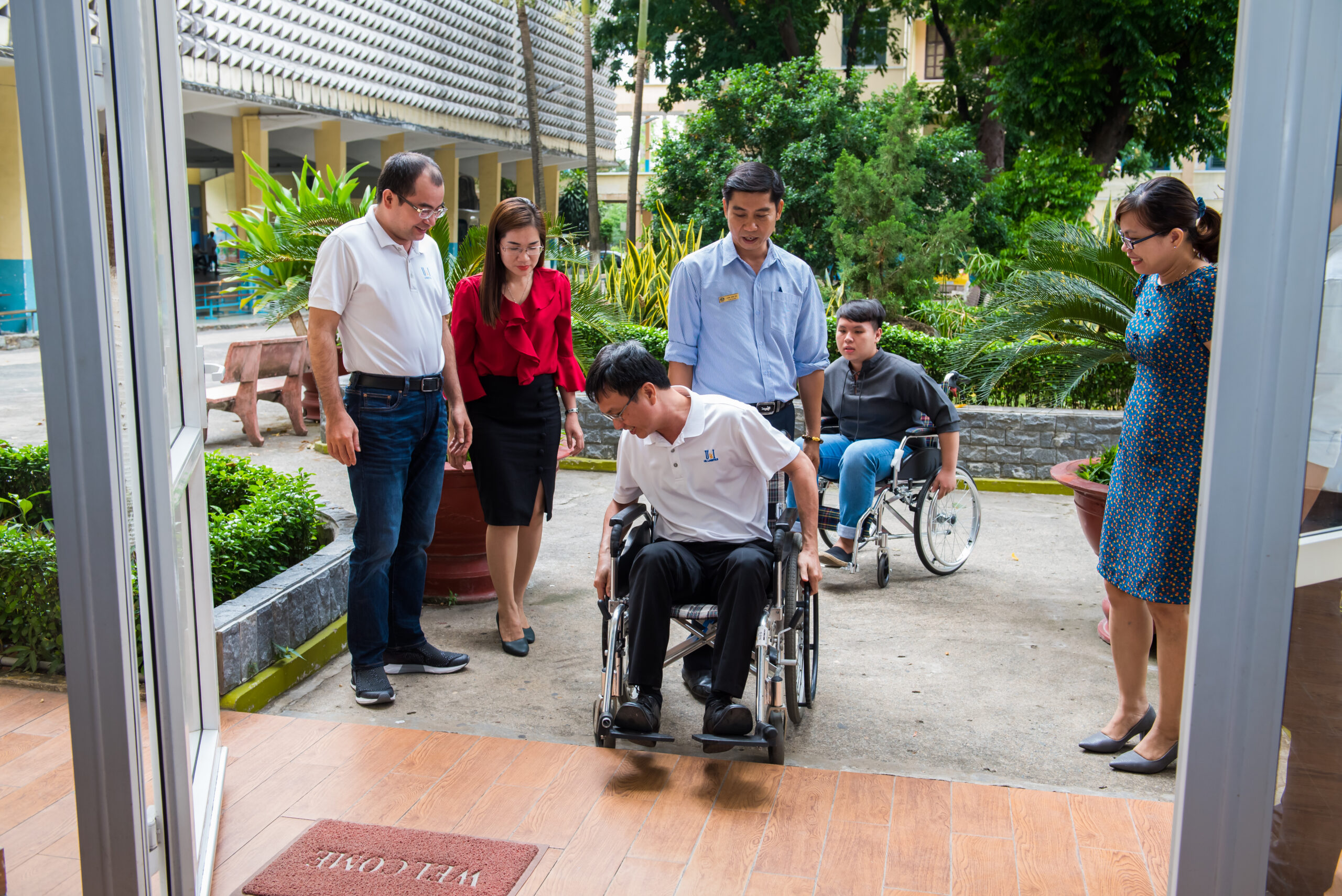
In addition, to promote international integration and adaptation to the requirements of the Fourth Industrial Revolution, we have focused on applying other contemporary developments from Australian education to vocational training in Vietnam. Firstly, we integrate green skills to ensure sustainable development, for example through using environmentally friendly materials, solar energy and saving energy in task arrangement and warehouse management. We guide students on how to approach supply chain management through digital applications, automation, artificial intelligence, etc. Secondly, we promote gender equality and inclusive education to help disadvantaged groups develop skills to participate in the labour market. This is a very practical and humane goal of vocational education and training.
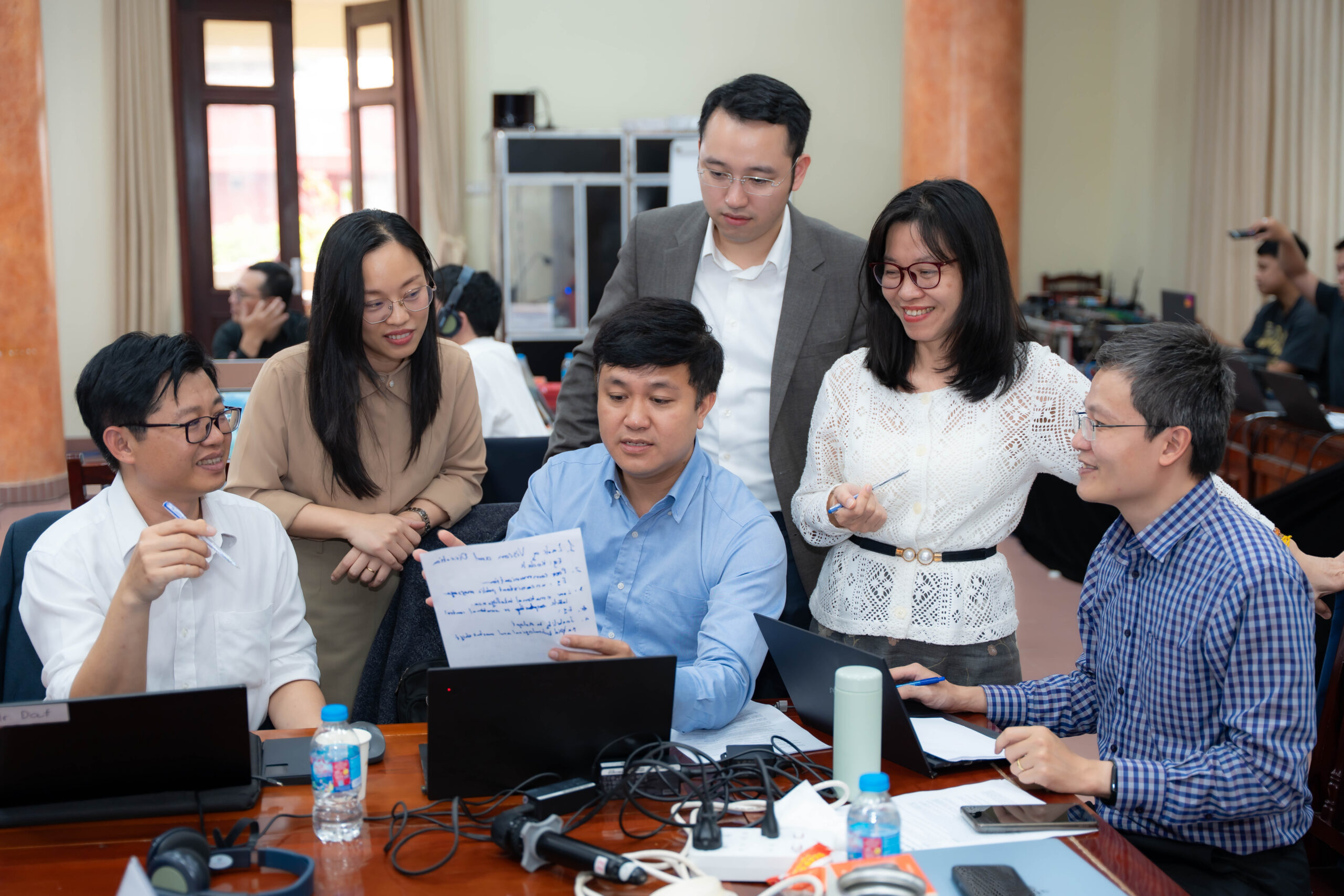
.jpg)
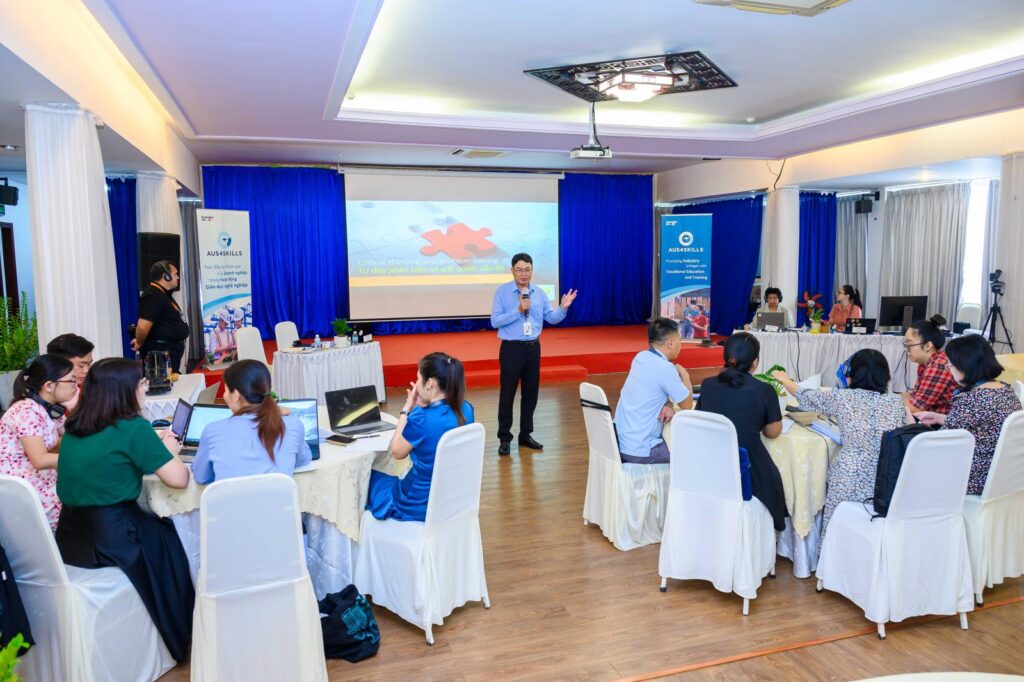
Advanced CBTA training for VET teachers.
In your opinion, what factors encourage Vietnamese students to pursue vocational education and training, instead of choosing university education? How can the VET sector continue to develop in Vietnam?
The Vietnamese labour market needs both university graduates and VET graduates, and whether graduates can find good jobs with high incomes depends more on their individual capacities than qualifications. For the VET sector to attract more students, there needs to be more raising of awareness among parents and students about possible occupations. We need to provide more information to help students decide among career paths, including industry skills forecasting and occupation trends.
The VET sector has certain advantages compared to university education. Firstly, students can choose from a range of careers that are in high demand by society and be confident of a job immediately after graduation. Secondly, vocational education is much shorter. A college degree takes only two to three years. You only need one to two years at an intermediate school. Tuition fees for vocational schools are currently lower than those for universities. My faculty’s general rate is 7 million VND per semester, helping to reduce pressure on students’ families. Thirdly, after graduation, students have two options: going to work immediately to develop their career or continuing to study at a higher level at home or overseas.
Do you have any further messages to share with future VET students?
After many years as a college vocational educator in logistics, I’m so proud that our students are gaining new knowledge and occupational skills quicker than ever and are passionate about their vocational career path. It’s also such a great joy to see our students understand the importance of personal development to proactively strengthen their employability in this everchanging market.
In the double-degree training program between my college and Tan Cang – STC, 100% of students passed the capacity assessment test of the company. At program completion, 25 participating students shared their newly-gained knowledge and skills with other schoolmates.
All 15 students participating in a pilot forklift operation training module through Aus4skills fulfilled their requirements in group activities and forklift driving practice to the satisfaction of the enterprises. Three enterprises intend to offer jobs to all 15 students right after they finish the assessment test.
However, a major issue for VET students is their limited foreign language capacity. They need to be more proactive in improving their English proficiency. Without this, they will face challenges in accessing new learning and working environments and opportunities at home and abroad.
Thank you very much! We wish you good health, more success and joy in your teaching career and contribute to the necessary development of Vietnam’s VET sector!